How to Craft an Effective Evergreen Email Sequence (That Grows Traffic & Revenue on Autopilot)
An evergreen email sequence is one of the most powerful (and most underused) tools bloggers can implement to grow traffic, build trust, and generate consistent revenue without being chained to their inbox every week.
Unlike weekly broadcasts, quick start guides, or seasonal campaigns, an evergreen sequence works quietly in the background. Once it’s written and automated, every new subscriber receives your best content in a strategic order, no matter when they join your list.
In this guide, you’ll learn exactly what an evergreen email sequence is, why it matters, how it fits into your email funnel, and how to create one that actually converts using the same methods I’ve used for my food blogging clients for over eight years.
What Is an Evergreen Email Sequence?
An evergreen email sequence is a pre-written, automated series of emails that is delivered to new subscribers after they join your email list.
These emails typically:
Feature your most helpful, high-performing content
Address common reader problems and questions
Build trust and authority over time
Softly promote your offers, affiliate links, or services
Because the content is evergreen, it stays relevant year-round. There are no seasonal references, time-sensitive language, or trends that could quickly date the emails.
Once your sequence is set up, new subscribers automatically enter the series and begin receiving value immediately, without you having to write or schedule new emails each week.
Who Evergreen Email Sequences Are Best For
Evergreen sequences work especially well for:
Food bloggers with consistent organic traffic
Bloggers growing their list through lead magnets
Creators with affiliate links, ads, or digital products
Bloggers who want to reduce their weekly email workload
Not ready yet? If you're brand new and don't have cornerstone content or offers in place, start with a short welcome sequence first, then expand into evergreen once you have more to share.
Why Evergreen Email Sequences Are So Important
Unlike weekly broadcasts or quick start guides that require constant upkeep, evergreen sequences are a set-it-and-scale-it strategy.
A well-structured evergreen sequence can:
Save hours of work by reducing the need for weekly emails
Build trust faster by consistently showing up in inboxes
Drive traffic to your blog automatically
Increase ad revenue through repeated pageviews
Generate passive income through affiliate links and offers
Make marketing feel simpler and less stressful
Instead of asking, “What should I email my list this week?”, your email marketing runs in the background, even when you’re focused on content creation, life, or other projects.
Why You Need an Evergreen Email Sequence
An evergreen sequence isn't just a nice-to-have. It's the backbone of a sustainable email strategy.
A well-structured sequence can:
Save hours each week by eliminating the constant pressure of new email ideas
Build trust faster by consistently showing up in subscribers’ inboxes
Drive recurring blog traffic automatically and boost your ad revenue
Generate passive income through strategically placed affiliate links
Make email marketing feel simple instead of overwhelming
Instead of asking "What do I email my list this week?" every Monday morning, your email marketing runs itself, even when you're busy creating content, spending time with family, or taking a well-deserved break.
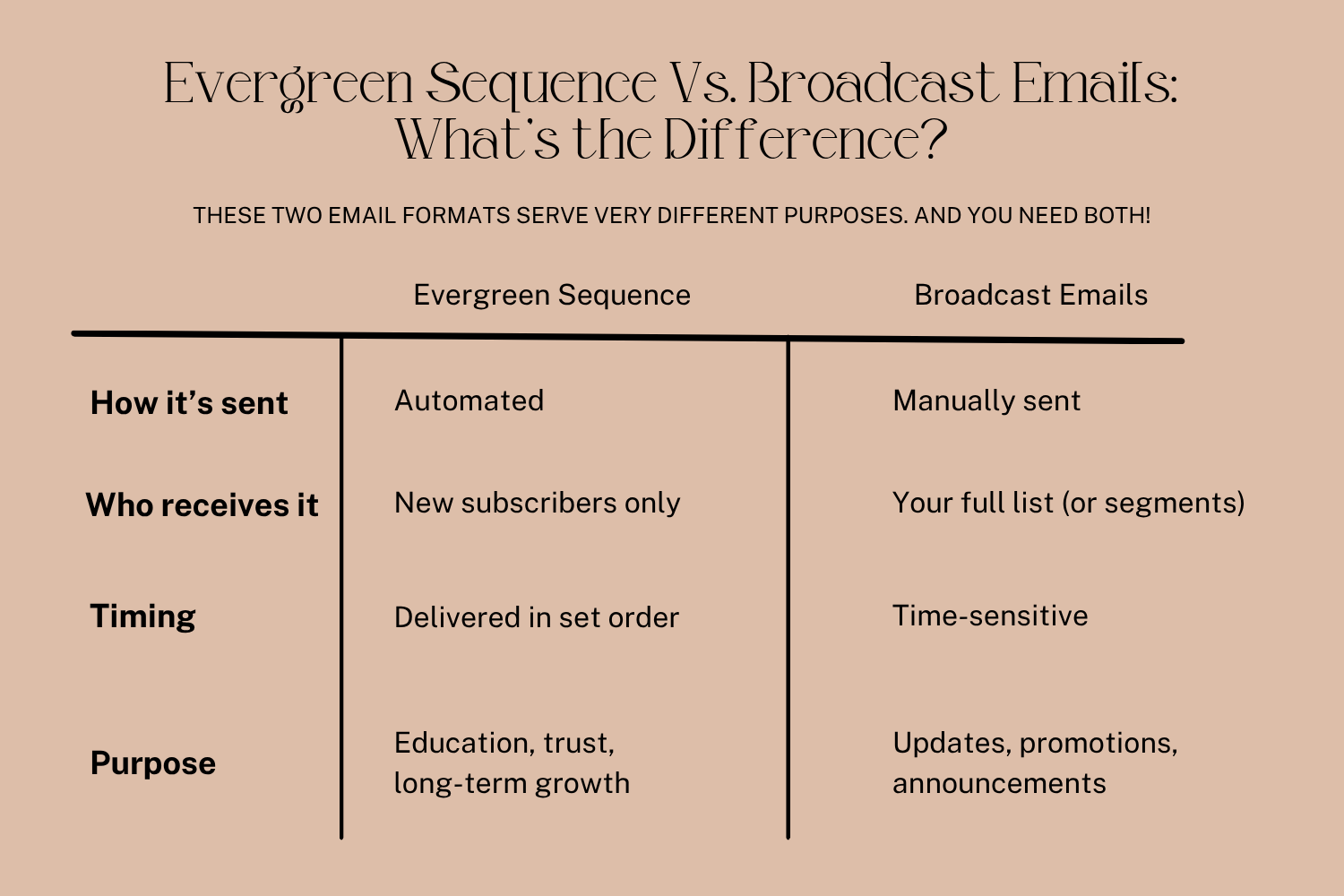
Think of your evergreen sequence as the foundation of your email strategy, and broadcasts as the supplement that keeps your existing readers engaged.
Where Evergreen Sequences Fit in Your Email Funnel
A simple email funnel often looks like this:
Lead Magnet → Welcome Emails → Evergreen Sequence → Broadcast Emails
The evergreen sequence bridges the gap between a new subscriber and a loyal reader who trusts your recommendations. It helps strengthen your relationship with your readers and creates a steady stream of high-quality content.
Types of Emails to Include in an Evergreen Sequence
There are really no rules when it comes to writing evergreen emails, especially if you’re utilizing them as part of a larger email funnel. If this is the case, you will have separate welcome series, sales funnels, etc. Therefore, I recommend keeping your evergreen email content based. You can weave in sales and promos.
However, generally speaking, evergreen emails should deliver your highest quality content to your readers. Think: High-traffic blog posts, blog posts that bring in high RPMs, useful evergreen content.
Save seasonal topics, launches, and more traditional sales for other funnels.
How Many Emails Should an Evergreen Sequence Have?
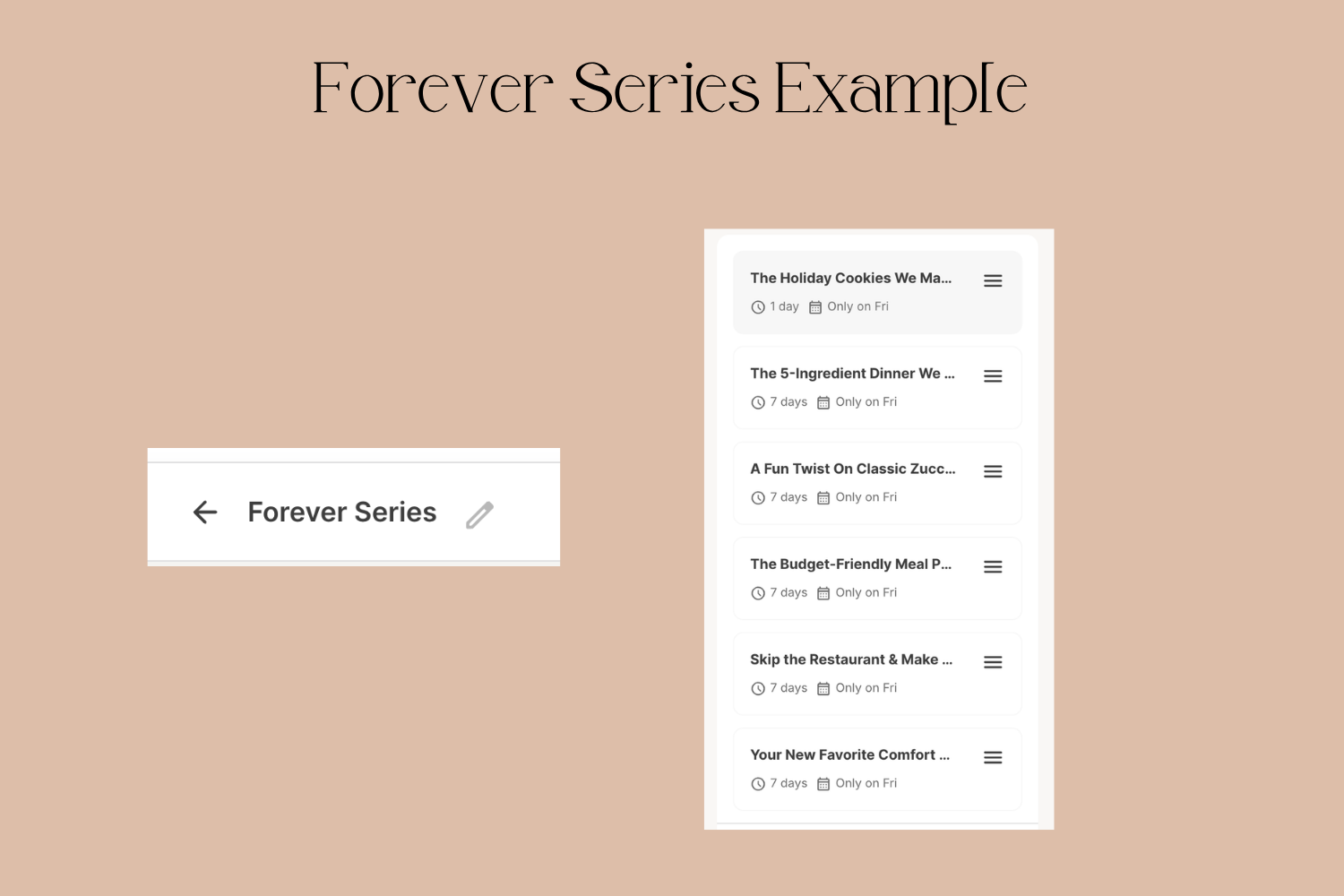
An evergreen email sequence can theoretically go on forever. I recommend continuing to add to your funnel as you create new content. However, if you’re just getting started, begin by drafting at least 5-7 emails. Schedule them to send seven days apart from each other. That way, subscribers get one email a week, regardless of when they enter the funnel.
How to Set Up an Effective Evergreen Email
Each evergreen email should follow a simple framework:
Identify a common reader problem or question
Acknowledge the struggle and relate to it
Share a clear solution or insight
Link to helpful content on your blog
Include a strong, clear call to action
Make emails skimmable, clickable, and focused on one main idea.
Evergreen Email Ideas for Food Bloggers
If you’re not sure what to include, consider evergreen topics like:
Your most popular recipes
Beginner cooking guides
Ingredient substitutions
Cooking basics (how to cook chicken safely, how to store produce)
Budget-friendly cooking tips
Dietary guides (gluten-free basics, dairy-free swaps)
Avoid time-specific language, or rotate content if needed.
Common Questions About Evergreen Email Sequences
-
Yes. Most sequences end naturally and transition subscribers to your regular newsletter, but they don’t have to! Continue to add to your sequence as you create new content, and it can essentially run forever.
-
Absolutely. Reviewing it once or twice per year is usually enough.
-
No. They support and enhance them.
Start Building Your Evergreen Email Sequence Today
Implementing an evergreen email sequence is one of the easiest ways for all bloggers, not just food bloggers, to improve traffic on their site, build a loyal fan base that is entirely their own, boost revenue through ads, promotions, and affiliate links, and boost engagement with their content! Even better, a well-done evergreen email sequence can be created once and essentially never touched again.
Looking for help getting your email sequence started? I’m here to help! Check out my email writing packages, or send me a message. I’d love to chat!
More Helpful Posts

Shyanne is an SEO writer and content writer from the U.S. Since 2019, Shyanne has worked with countless food bloggers, health professionals, and fitness experts to rank on Google and increase website traffic and drive email conversions.
With an English degree, a minor in nutrition, a minor in history, and a concentration in creative writing, Shyanne loves working with entrepreneurs and brands in the health, wellness, and food spaces.
Not only does she offer done-for-you SEO and blog writing, but she also provides done-for-you email strategies and packages for a comprehensive business plan that allows founders and CEOs to take a step back from social media and focus more on what they love, knowing the right people are finding their brand.