Do People Still Read Blogs? (What You Need to Know for 2026)
Do people still read blogs? As a professional blog writer, I get this question almost every single day. We’ve all heard that “blogging is dead,” but here’s the truth: Blogging is more alive than ever and remains one of the most effective marketing tools for small businesses and entrepreneurs.
There’s no denying that in a world of video, AI, and fast-paced content, the nature of blogging has changed. However, according to Master Blogging, around four in five internet users still use and read blogs. In short, billions of people still read blogs every single day.
In this post, I’ll dig into how blogs work to transform businesses and boost conversion rates, and how to set your blog up for success in 2026!

Do People Still Read Blogs?
Clearly, many people still read blogs, and out ofthose billions, there are quite a few who read blogs regularly. One study from Ahrefs concluded that 77% of internet users read blogs daily.
Keeping this in mind, many successful businesses and entrepreneurs invest in SEO blogging as part of their marketing strategy. Don’t believe me? According to Content Marketing Institute, Orbit Media Studios, and LocaliQ:
84% of corporate websites have a blog
69% of marketers use long-form articles
77% of bloggers say blogging delivers results
51% of bloggers get strong results when spending 4+ hours on an article
71% of small businesses are satisfied with their SEO results
46% of small businesses are planning to invest in SEO this year
Why are blogs still so popular? For starters, they’re one of the best ways to dive deep into a specific topic. If someone is interested in a particular subject, a short video often just doesn’t cover the depth needed.
Wordsrated determined that the average reader can read 238 words per minute. In addition, a properly optimized blog article is formatted with headings and subheadings that make skimming easy, effectively speeding up the process even further. This means that readers can quickly glean the information they need.
And once they do that, they build trust with your brand and are likely to come back or continue to click on similar articles to learn even further, often coming back again and again.
Reasons People Still Read Blogs
Beyond being able to find deep dives into content not found in short-form videos or social posts, blogs also remain popular because they provide:
Problem-solving support: People often turn to blogs to find solutions for specific challenges, whether that’s learning a skill, fixing an issue, or learning about a product or service.
Niche content: Niche content creates a space for readers to dig deep into specific topics, allowing them to find relevant, long-form content and keep up to date with hobbies, passions, and interests.
Entertainment and news: Blogs come in all shapes and formats, providing interesting stories, personal experiences, storytelling, and even breaking news. Combining one or more of these factors can help keep readers entertained and informed, which ultimately leaves them coming back for more.
Who Reads Blogs?
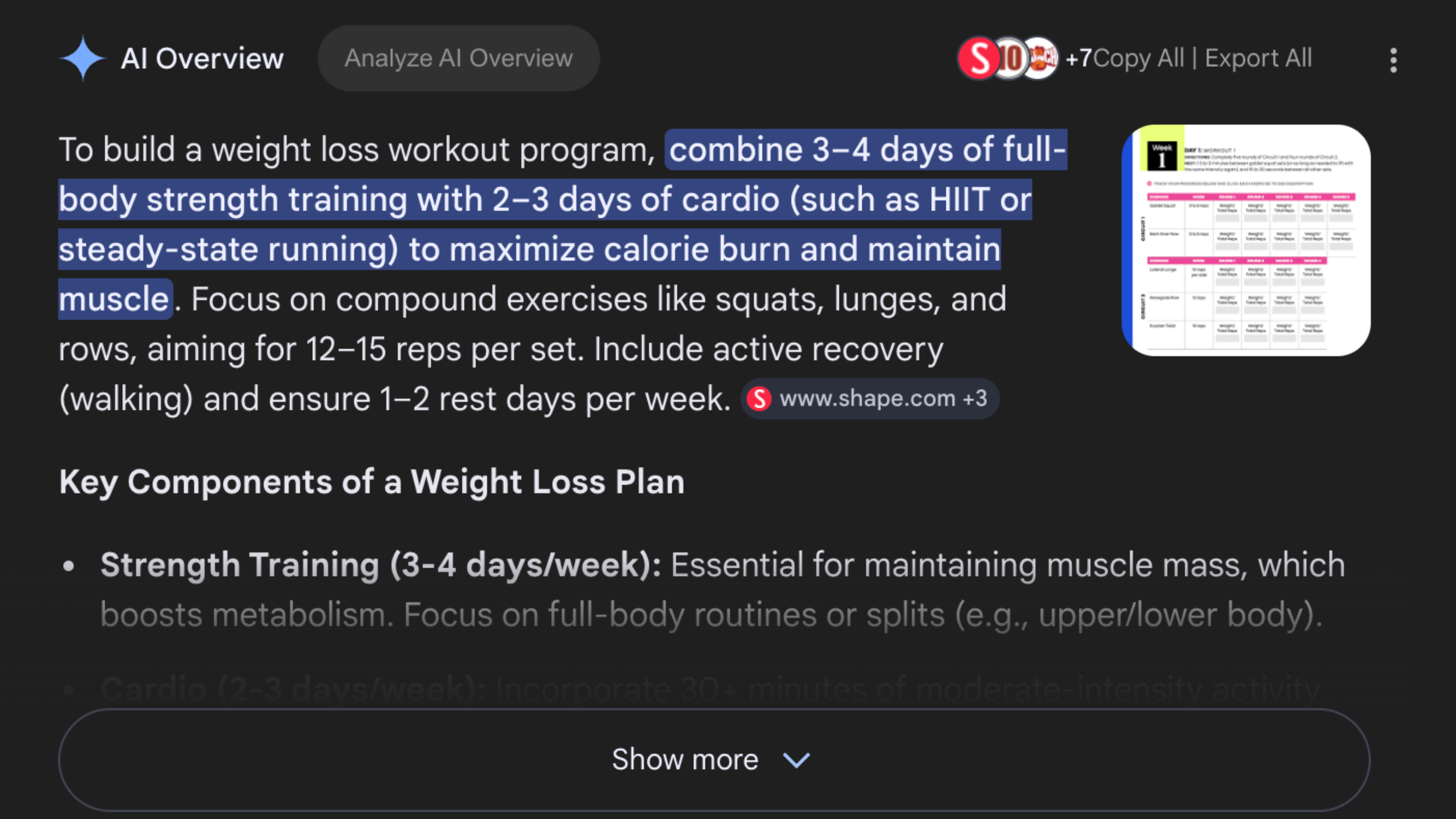
Most people who use the internet to learn and shop use blogs. Anyone who goes to the internet with a problem to solve is usually presented with blogs. For instance, if we Google “how to build a workout program for weight loss,” the AI overview links to blogs. The top link is also a blog post.
Benefits of Blogging in 2026
Now that we’ve determined that the answer to “Do people still read blogs?” is definitely yes, why should you care? Google is a huge reason!
Even with the rise of AI, most internet users still turn to Google to find information. In fact, most people conduct three to four Google searches every single day. And if you have a well-optimized blog, chances are, you can show up in those searches. According to one study, blogs appear most often in top Google positions, appearing in the top five positions 23% of the time.
If one of those blogs is yours, you can reap incredible benefits, including:
Growth online: Appearing at the top of a search result leads to more clicks to your site, generating ad revenue and boosting your brand awareness.
Improved credibility: Answering specific questions and queries related to your chosen niche positions you as an expert, building trust with potential clients.
Fuel community and brand loyalty: Having an engaged audience is a great way to facilitate conversation and social sharing, creating a strong community that improves your brand credibility and builds trust.
Boosted networking: Successful blogs gain attention and can lead to opportunities and networking.
The Evolution of Blogging
Gone are the days of spilling all your guts online. Smart businesses no longer treat blog posts like a diary or forum. Instead, they use them strategically to educate their target audience, build trust, and generate strong leads. Businesses use their blogs to market their services or products, turn blog readers into email subscribers, or monetize through affiliate marketing.
That said, blogs don’t have to be (and shouldn’t be) clinical posts. They actually benefit from personalized stories. Providing specific examples and relating back to the audience is one of the best ways to build trust.
How Readers Consume Blog Content
In 2026, most blog readers are looking to:
Get answers to questions
Learn how to do something
Get relevant information on trends, news, products, etc.
Decide what to buy
Get advice from a trusted expert
Keeping this in mind, there are several ways they might consume content, including:
Scanning for information: Many readers quickly scan for headlines, bullet points, and highlighted stats to gain the information they’re looking to find.
Repurposed content on other platforms: Share blog content in emails, social media posts, YouTube, etc.
AI and language models: Summaries and overviews from AI tools frequently pull from blogs and often link back to your site.
Search engine visibility: Every time a reader interacts with your article by clicking or even partially reading the content, it signals to Google and other search engines that your site is useful, which helps it show up even more, leading to further discoveries and traffic.
Tips for Effective Blogging in 2026
Ready to start blogging to improve your brand visibility and boost your income? If so, your next question might be how do I even stand out online? With over 600 million blogs online and more being added every day, this is a valid question.
Luckily, there’s a simple solution! While every blog is nuanced, I see incredible results for my blog and my clients’ using these tips for every post I write. For example, one client has had a lot of luck ranking in AI overviews, and another is showing up in the top 5 posts in Google frequently.
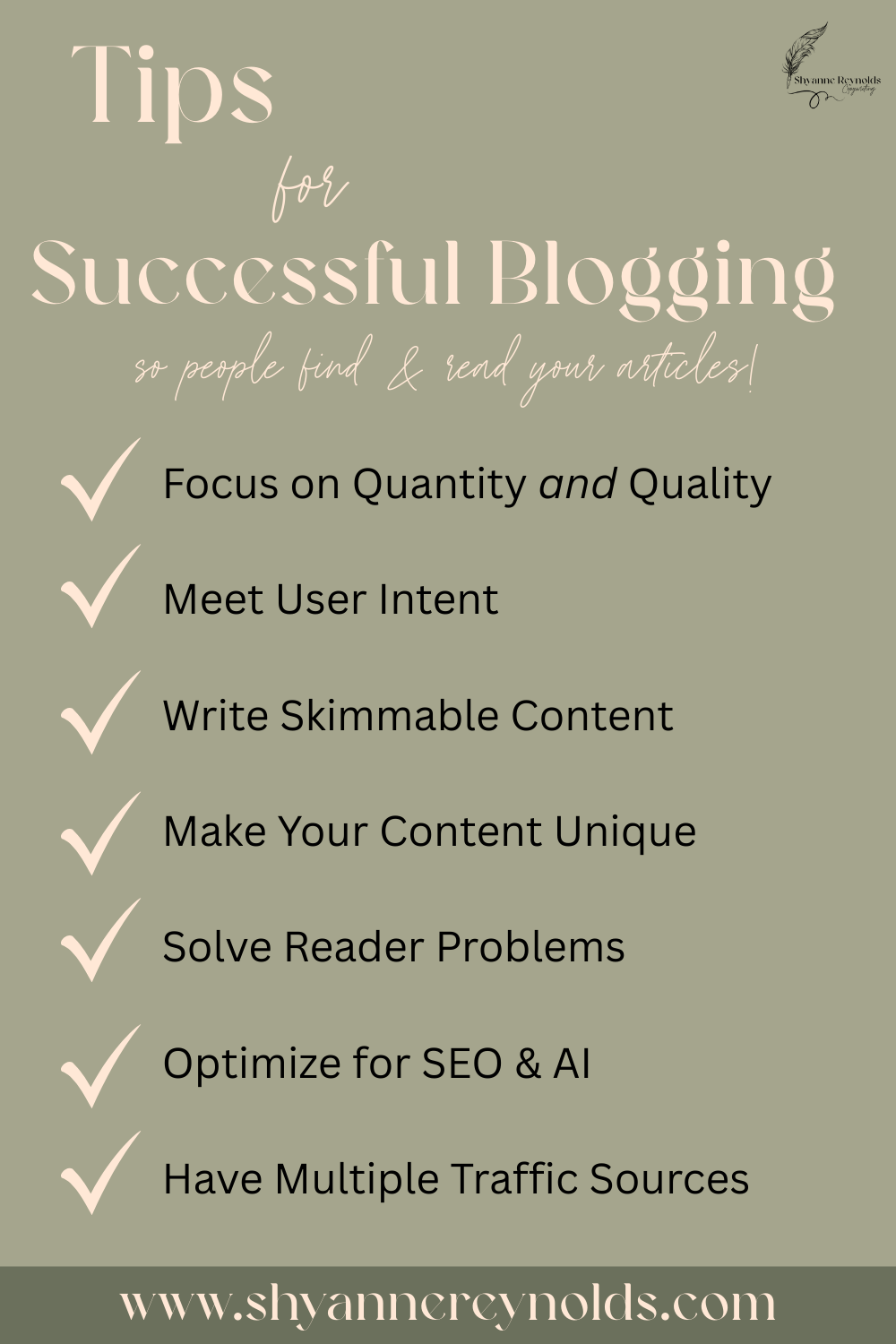
Focus on Quality and Quantity
Experts often debate whether blog quality or blog quantity matters most. I say they’re both important.
Here’s what I see works:
In most cases, the answer to how long should a blog be for SEO is 1,500+ words. This varies from post to post and the topic at hand, but in general, longer posts result in better, more useful content.
Sharing helpful content with specific, personalized examples, insight from experts, FAQs, and helpful visuals.
Publishing or updating content at least bi-weekly.
Avoiding low-quality posts just for the sake of publishing. Quality should always take precedence over quantity. You don’t want to weigh your site down with unhelpful content. This will hurt your credibility.
Meet User Intent
Make sure to do your research and understand what readers are looking for when targeting specific short-term keywords, long-term keywords, and semantic keywords. Meeting user search intent will help you rank on Google and improve trust with readers.
To do so:
Be specific and clear in your copy
Include your target keyword in the first few sentences – the earlier, the better!
Avoid unnecessary fluff and keyword stuffing
Share examples, helpful resources, and useful visuals
Add an FAQ section when relevant for additional value
Write Skimmable Content
Similar to emails, most blog readers quickly skim posts. If they can’t find what they’re looking for quickly, they’ll click off, signaling to Google that your content isn’t helpful.
To help your readers find information quickly:
Use headers to break up content
Include lists, charts, and bullet points
Use short paragraphs (1-3 sentences)
Include helpful images, videos, or graphics
Emphasize text with italics and bolding to highlight important content
Make Your Content Unique
This is the easiest way to make your blog posts stand out, setting them apart from the thousands of similar posts online. Of course, you’ll cover much of the same content in top-ranking posts, but you can also set your content apart with:
Personal stories
Specific examples relevant to your readers
Insights from your own polls or subject matter experts
Help Readers Solve Their Problems
Regardless of your niche, your readers are looking to solve a problem. Running a food blog? Maybe they need help with meal prepping or finding breakfasts for the workweek.
Make sure to cover pain points and provide helpful information. This not only helps your posts rank online but also builds trust with your audience and leads to better conversions on your end, whether you’re looking to keep them on your site, prompt them to make a purchase, or grow your email list.
Optimize for SEO & AI
Despite rumors floating around online, SEO is still relevant and is deeply related to AI. Optimizing for SEO is about clear writing, organized content targeted toward a specific keyword that ultimately helps your audience.
This not only helps your posts rank on Google, leading to higher traffic but also helps AI pull your posts. Therefore, by optimizing for SEO, you’re also optimizing for AI and vice versa.
Both ways, you’re increasing your blog’s chance of being seen online. To make your content discoverable via SEO and AI engines:
Target high-traffic keywords: Make sure to include your keyword in the title, intro paragraph, and naturally throughout the text. I use SEMRush for SEO research, but Keysearch is also a great option.
Answer questions clearly: Blogs aren’t the place for poetic copy. Be concise and straightforward so Google and AI can easily pull from and showcase your work. Remember, the average American has a reading level of that of a 7th or 8th grader.
Use clear formatting: Break your content up with headers, bullet points, lists, and short paragraphs, making it easy to skim.
Provide depth: Answer the primary question quickly, but make sure to go beyond the surface level, providing examples, resources, and data.
Match user intent: Make sure to fully satisfy what readers are looking for so they don’t have a need to go elsewhere.
Have Multiple Traffic Sources
Website marketing and SEO are highly effective methods for getting your content seen, but relying on them alone can severely limit your growth. To boost your blog’s visibility, I highly recommend using multiple traffic sources to attract readers and improve your chances of generating leads.
Some of the most popular ways to promote your blog include:
Social Media: Share your articles on Instagram, Facebook, LinkedIn, or Pinterest to drive traffic and boost engagement.
Email Marketing: Send your email list a brief overview of your article and a link to it, prompting them to follow it to read more. Flodesk and Kit are my recommended platforms in terms of usability, pricing, and integrations.
YouTube: Create a video related to your blog content, and include links to your articles to drive traffic.
Guest Blogging: Contribute articles to blogs with similar readers, linking back to your content to reach new audiences and boost your blog’s authority.
How to Save Time Using Multiple Platforms
Creating content for every platform can be time-consuming and quickly become overwhelming, but blogging can help alleviate this problem. If you start with a long-form blog post, you can easily repurpose it into short-form content for social media, email newsletter, podcast, and more to reach even more people.
Not sure how to do this? Try breaking down your next blog post into:
A social media post highlighting key tips or quotes
Repurpose your social media post into a YouTube short or use it as a jumping-off point for a long video
An email newsletter including snippets and links back to the full article
Podcast episodes discussing the same topic
A Pinterest post using the primary keyword and hero image from the post
Conclusion: Do People Still Read Blogs?
In short, yes, people still read blogs. I hoped this article helped make that clear and showed you why blogging is still important in 2026. While the landscape has changed, most internet users continue to use blogs to find deep-dive answers to specific problems.
As a result, blogging remains an effective tool for reaching audiences, building trust, and generating strong leads and revenue. When done well, blogs are an excellent marketing strategy to help propel your business.
For more help with blogging, explore my blog writing offers. I’d love to help you create content that allows your brand to be seen on search engines, reach your audience, build trust, and boost your income!
More Helpful Resources

Hi! I’m Shyanne.
I’ve been a content writer for 8 years now. I fell into this filed by accident after applying to a VA position from a nutritionist while in college.
Fast forward a few years later, and I had an English degree with a concentration in Creative Writing and minors in History and Nutrition, and a fledgling business.
Now, I help food bloggers, fitness experts, and health professionals with done-for-you blog writing and done-for-you email writing services!
Growing up, I always loved food and cooking, and writing was my first passion. Later, I discovered fitness and nutrition, and pursued personal training before really leaning into my writing career. Now, getting to marry all of my passions while helping others achieve their own goals truly feels like a dream.
I love all aspects of writing and am trained in SEO and copywriting. If you’re interested in hiring a content writer to handle your needs, I promise you’ll be in good hands!

Hey there — I’m Shyanne
Your new go-to SEO specialist and content writer for all things blogging and email.
If you’re a food blogger, fitness expert, or health professional who landed on this page, chances are you’re crazy good at what you do. But copy? SEO?
Not your thing.
Through research-backed SEO, content mapping, and human-driven copy, I help creators and entrepreneurs drive traffic to their brand and build deeper connections to foster community and boost sales — without the need to show up on socials every damn day.
If you’re ready to take your copy strategy to the next level, I’m ready to help!