Common Blogging Mistakes Food Bloggers Make (& How to Fix Them)
I've been writing for food blogs for eight years, and there are a few common blogging mistakes I see over and over again. Of course, there are many reasons to start a blog, and many food bloggers do so out of their love of the culinary world.
As a result, they put in hours of work testing recipes, styling photos, and writing posts, only to feel frustrated when search engine traffic and income don't follow. It's not because the recipes aren't good.
More often than not, growth stalls because of just a few common blogging mistakes. The good news? Most of them are easy to avoid and simple to fix once you know what to look for!
In this post, I'll cover some of the worst blogging mistakes food bloggers make, along with clear, practical ways to correct them so your blog can grow sustainably.
Common Mistakes in Blogging
According to data from Wix, there are over 600 million blogs online. But that doesn't mean that those blogs are following the right "rules."
Learning how to avoid common blogging mistakes can be the catalyst that propels your site above the rest, leading to rankings that stand out above all the noise, regardless of your niche. Below are the most common blogging mistakes I see in the food space in particular, along with steps to avoid them to improve your content and boost your rankings.
Mistake #1: Writing Without a Clear Strategy
One of the biggest mistakes food bloggers make is publishing content without a plan.
Posting random recipes or topics “because they sound good” makes it difficult for readers and search engines to understand what your blog is about. Without a clear direction, your content competes with itself instead of building authority.
How to fix it:
Choose a primary niche or focus (even if it’s broad)
Plan content around related themes
Create posts that support each other through strategic link building
Consistency builds trust with both readers and Google, boosting your blog's ability to be seen and encouraging readers to come back time and time again.
Mistake #2: Ignoring SEO Basics
Many food bloggers believe SEO is optional or something to worry about later. In reality, SEO should guide your content from the beginning.
Without basic optimization, even the best recipes can struggle to get discovered.
How to fix it:
Research keywords before writing
Use your primary keyword in the title, URL, headings, and introduction
Optimize images with descriptive file names and alt text
Write for humans first, but structure content so search engines can understand it
SEO doesn’t have to be complicated, but it does need to be intentional. Keep reading to learn about semantic keywords, find a complete SEO checklist for beginners, and how to optimize your recipes for Google search intent!
Mistake #3: Writing Long, Unstructured Posts
There's no set rule on how long blog posts should be for SEO, and long posts aren’t inherently bad. However, unstructured posts are hurting your discoverability and readability, leading to a lack of eyes on your content and a higher bounce rate when people do land on your posts.
Large blocks of text, buried instructions, and unclear sections make it hard for readers to find what they need. When readers leave quickly, it signals to search engines that your content isn’t helpful.
How to fix it:
Break posts into clear sections using headings
Keep paragraphs short and skimmable
Use bullet points and bold text to highlight key information
Include a table of contents for longer posts
Good structure improves readability, engagement, and rankings.
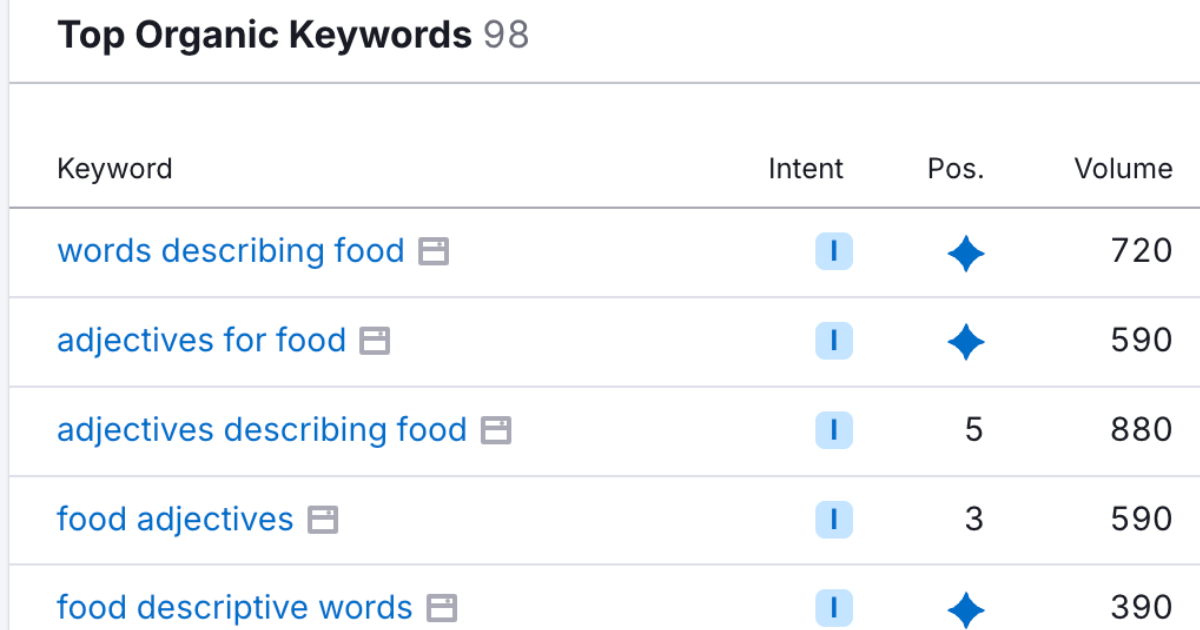
A chart showing the top ranking keywords on shyannereynolds.com.
Mistake #4: Treating Blog Posts Like Personal Journals
While storytelling can be powerful, too much personal content at the top of a post can frustrate readers who are looking for answers.
Most food blog visitors are browsing with a purpose. They want a recipe, a tip, or a solution.
How to fix it:
Lead with value, not background stories, focusing on building E-E-A-T while still providing context from your personal life relevant to the recipe
Keep introductions concise and relevant (while keeping them fairly personalized)
Save longer personal updates for newsletters or social media
You can still use your voice. Just don’t let it overshadow the reader’s needs.
Mistake #5: Publishing Without Updating Old Content
Many bloggers focus only on publishing new posts and forget about older ones. Over time, outdated content can lose rankings, traffic, and relevance.
Updating existing posts is often faster and more effective than creating new ones.
How to fix it:
Refresh old posts with updated information
Improve headings, structure, and internal links
Optimize content for better keywords if needed
Update images and formatting
Content updates are one of the easiest ways to boost traffic!
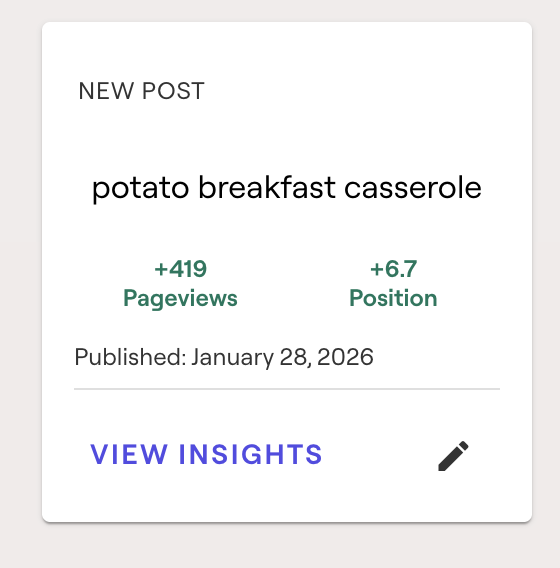
Insight showing an updated blog post jumping in rankings and page views.
Mistake #6: Not Building Internal Links
Internal links help readers navigate your site and help search engines understand how your content connects. Without them, posts exist in isolation and lose ranking potential.
How to fix it:
Link related recipes and blog posts naturally
Use descriptive anchor text
Create clusters of related content around key topics
Strong internal linking strengthens your entire site, not just individual posts.
Mistake #7: Trying to Do Everything at Once
Many food bloggers burn out by trying to master SEO, social media, photography, email marketing, and monetization all at the same time. This often leads to inconsistent posting and frustration.
How to fix it:
Focus on one growth area at a time
Build a strong foundation before expanding
Prioritize skills that drive long-term traffic and income (like SEO)
Slow, strategic growth is more sustainable than chasing every trend.
Mistake #8: Skipping Calls to Action
Even great content can underperform if readers don’t know what to do next. If you don’t ask readers to take action, many won’t.
How to fix it:
Include one clear call to action per post
Encourage comments, ratings, shares, or email signups
Make the next step obvious and easy
Small prompts can significantly increase reader engagement.
Final Thoughts
Every blogger makes blogging mistakes, especially in the beginning. It’s part of the learning process. The key is recognizing what’s holding you back and making small, strategic changes over time.
By focusing on structure, SEO, clarity, and reader experience, you’ll create content that’s easier to find, easier to read, and more effective at supporting long-term growth.
If you’re ready to take your food blog more seriously, refining your content strategy is one of the best places to start. And if you’re looking for help with blog writing or email writing, I’d love to chat!
More Helpful Resources

Hi! I’m Shyanne.
I’ve been a content writer for 8 years now. I fell into this filed by accident after applying to a VA position from a nutritionist while in college.
Fast forward a few years later, and I had an English degree with a concentration in Creative Writing and minors in History and Nutrition, and a fledgling business.
Now, I help food bloggers, fitness experts, and health professionals with done-for-you blog writing and done-for-you email writing services!
Growing up, I always loved food and cooking, and writing was my first passion. Later, I discovered fitness and nutrition, and pursued personal training before really leaning into my writing career. Now, getting to marry all of my passions while helping others achieve their own goals truly feels like a dream.
I love all aspects of writing and am trained in SEO and copywriting. If you’re interested in hiring a content writer to handle your needs, I promise you’ll be in good hands!