Why Seasonal Content is a Food Blogger’s Secret Weapon
Want to grow your food blog’s traffic without constantly starting from scratch? Seasonal content is one of the most powerful (and underutilized) tools in your blogging toolkit! In this post, I’ll cover why it works, how to make it work for you, and how I help clients map out seasonal content to stay consistent with publishing and grow their blogs.
What Is Seasonal Content (and Why Should You Care)?
Seasonal content refers to recipes, guides, and posts that are tied to a specific time of year, whether that’s a holiday, a season, or a cultural moment. Think: Christmas cookies, summer grilling guides, or fall soup recipes.
Unlike evergreen content, seasonal posts follow a predictable traffic pattern, spiking seasonally when people are actively searching for specific content and then typically dying down the rest of the year.
This cycle repeats annually, driving consistent traffic you can rely on annually. It can be a huge boost for your blog, especially if you utilize seasonal posts during down seasons! One well-written seasonal post can drive traffic year after year with minimal updates (or effort) on your end.
The Real Reason Your Traffic Ebbs and Flows
If you’ve been blogging for a while, you’ve probably noticed that your analytics don’t stay consistent. Some months are booming, while others feel like a traffic ghost town.
A lot of bloggers blame algorithm updates or social media, which can definitely play a role. However, seasonal search behaviour is also a big culprit for fluctuating blog traffic.
People search differently depending on the time of year. For instance, in December, people are cold, largely indoors, and preparing for the holidays. As a result, they’re searching more frequently, actively looking for recipes like Christmas cookies and holiday party appetizers.
Meanwhile, in January, many internet users want healthy reset meals and soup recipes, and in March, they’re looking for Easter brunch ideas.
If your content calendar doesn’t account for those shifts, you’re leaving a significant amount of traffic (and ad revenue) on the table.
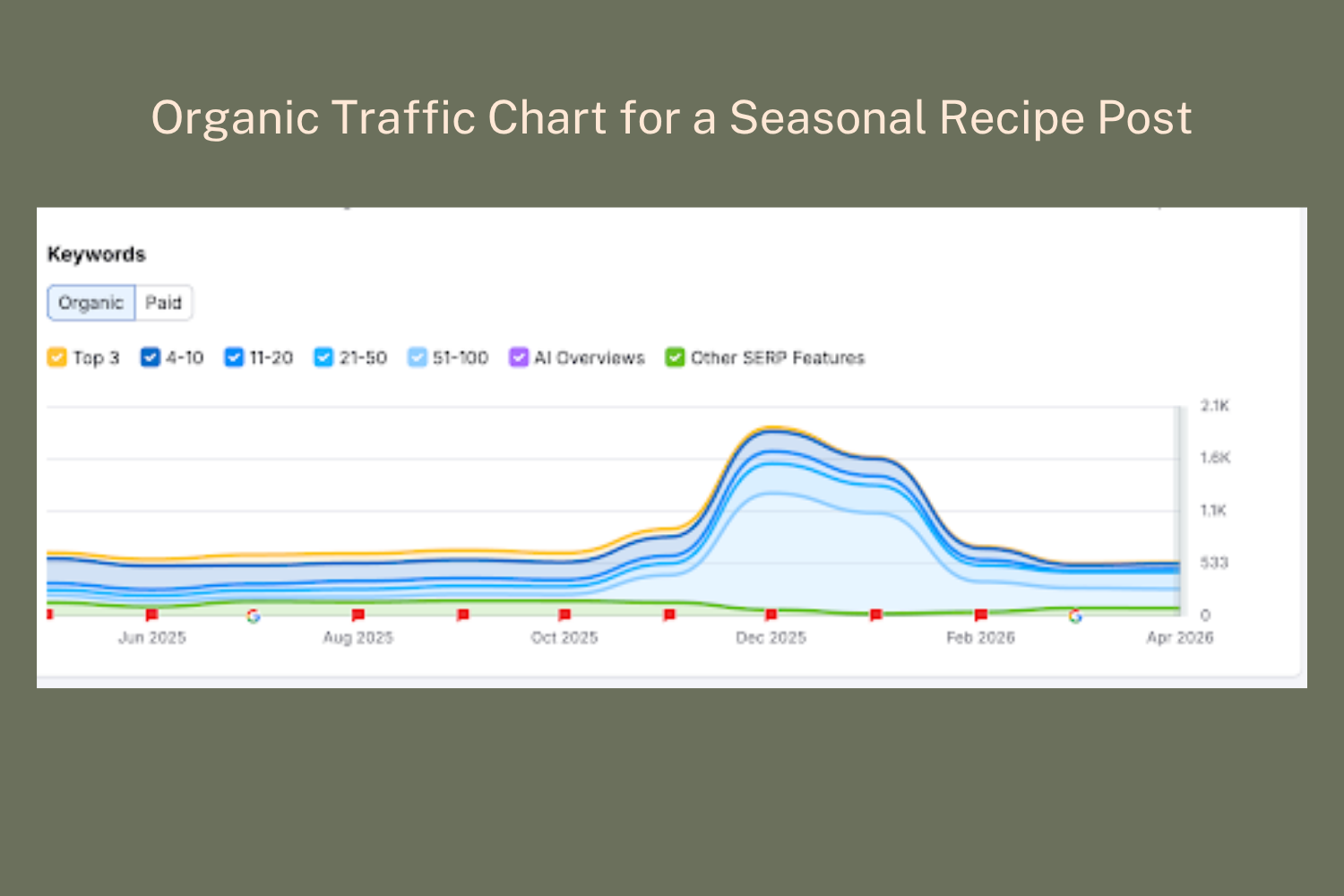
This graphic marks traffic trends for a Christmas cookie post, showing a sharp increase in December.
5 Reasons Seasonal Content is Worth the Investment
I know planning seasonal content can feel a little overwhelming. However, if implemented well, it can actually reduce overwhelm and boost your blog traffic with ease!
1. Predictable, Recurring Traffic
When a seasonal post ranks well, it doesn’t just drive traffic once. That traffic comes back around every year. That means a post you write today could be earning you pageviews and ad revenue for years with just minor updates.
2. Higher Search Intent
Seasonal searchers are usually ready to act. Someone searching “Best Thanksgiving side dishes” in November isn’t just browsing. They’re planning a meal and are ready to cook. If they land on your page, that high intent leads to better engagement, more time on the page, and higher conversion rates.
3. It Builds a Content Buffer
Seasonal content gives your blog a built-in publishing rhythm. When you’re not sure what to write next, the calendar tells you. In January, you know you’ll be focusing on comfort foods and healthy resets. In February, you’ll create Valentine’s Day content, and in March, you’ll focus on St. Patrick’s Day and spring produce.
That structure eliminates any guesswork, reduces stress, and makes it really easy to create a cohesive content ecosystem, serving your readers exactly what they’re looking for.
4. It Signals Authority to Google
Consistently publishing timely, relevant content tells Google your blog is active and authoritative in your niche, helping to build domain authority and E-E-A-T for all your posts. Over time, this builds the kind of trust that leads to better rankings across your entire site, not just with seasonal content. It also never hurts to continue to serve your readers new content you know they’ll love!
5. It Keeps Your Audience Engaged Year-Round
Seasonal content helps meet readers where they are, helping them with what they’re actually searching for, planning, and cooking right now. Staying relevant in their timeline builds loyalty, which leads them to come back to your blog again and again, often forgoing Google search entirely.
How to Make the Most of Seasonal Content
Are you on board with the importance of seasonal content for food blogging? I hope so! Here’s how to start implementing it.
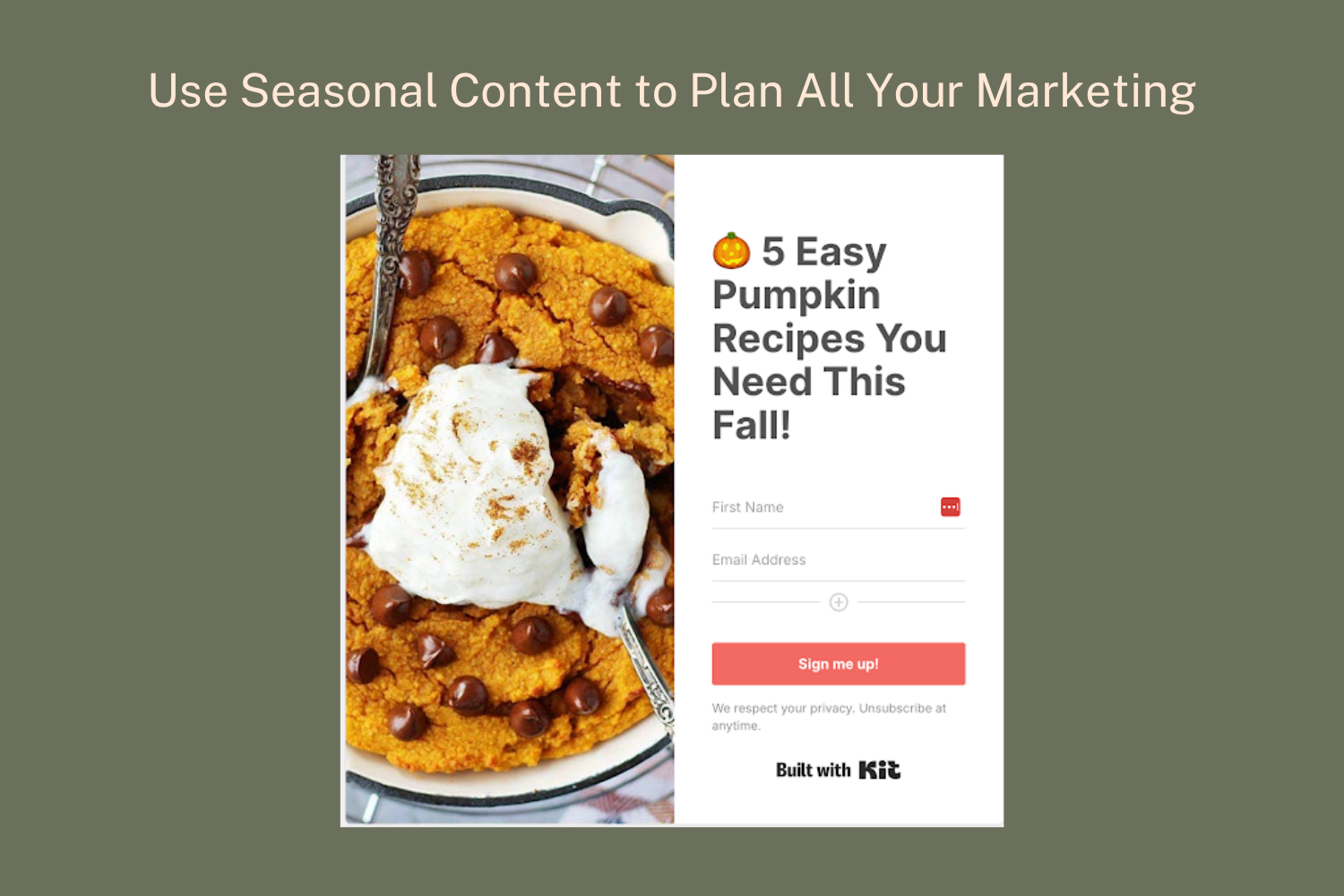
Use seasonal blog posts to plan email campaigns (like the series listed above), social media, etc.
1. Start Planning 60-90 Days Ahead of Time
Google doesn’t rank content overnight. If you want a post to show up in December search results, it’s not a bad idea to publish it in September or October. This means seasonal content has to be planned well in advance, like a traditional editorial calendar.
Posting early allows plenty of time for a post to get indexed and climb in traffic rankings before the peak seasonal traffic. Plus, if all your seasonal content is ready to go ahead of time, you can map out quick start guides, email promotions, and social media calendars, too. You’ll be an organized, content-creating machine!
2. Update Your Old Seasonal Posts Every Year
Don’t just publish posts and forget about them. Make a note in your calendar or content planning system to revisit seasonal posts each year before the season hits.
Refresh the photos, update the text, add new keywords, and republish when it makes sense. Google rewards updated content. And updating already written posts is a lot less work than creating new content from scratch! In addition, keeping your entire site updated and relevant boosts its overall health, contributing to better rankings for everything.
3. Align Seasonal Themes with Your Niche
Not every holiday or trend will make sense for your blog. For instance, a Paleo food blog probably wouldn’t post a traditional sugar cookie recipe just because it’s December. But they might post a Paleo sugar cookie recipe!
Focus on seasonal content that fits naturally with your audience and your niche, and skip the themes that don’t. Forced content hurts more than it helps, diluting your authority and breaking trust with your audience.
In Conclusion
Seasonal content is one of the most reliable ways ot build consistent, recurring traffic on a food blog. When done well, it works while you sleep, bringing in new readers every holiday season without requiring you to constantly create new content.
The trick for success is starting early, staying niche-focused, and updating your posts consistently.
Not sure where to start, or just don’t have time to keep up with seasonal content planning? Check out my food blog writing services to see how we can work together!